Benedict’s Law: A Historic Change for Children With Allergies in Schools
For thousands of parents across England, sending a child with severe allergies to school has long come with fear, uncertainty, and trust that systems would work in an emergency.
Now, that is beginning to change.
Following years of campaigning by families, clinicians, charities, and allergy advocates, Benedict’s Law has moved decisively forward, with the Government confirming new mandatory allergy protections for schools from September 2026.
For many families, this marks one of the most important advances in school allergy safety in decades.
What Is Benedict’s Law?
Benedict’s Law is a national campaign and legislative movement designed to improve allergy safety in schools across England.
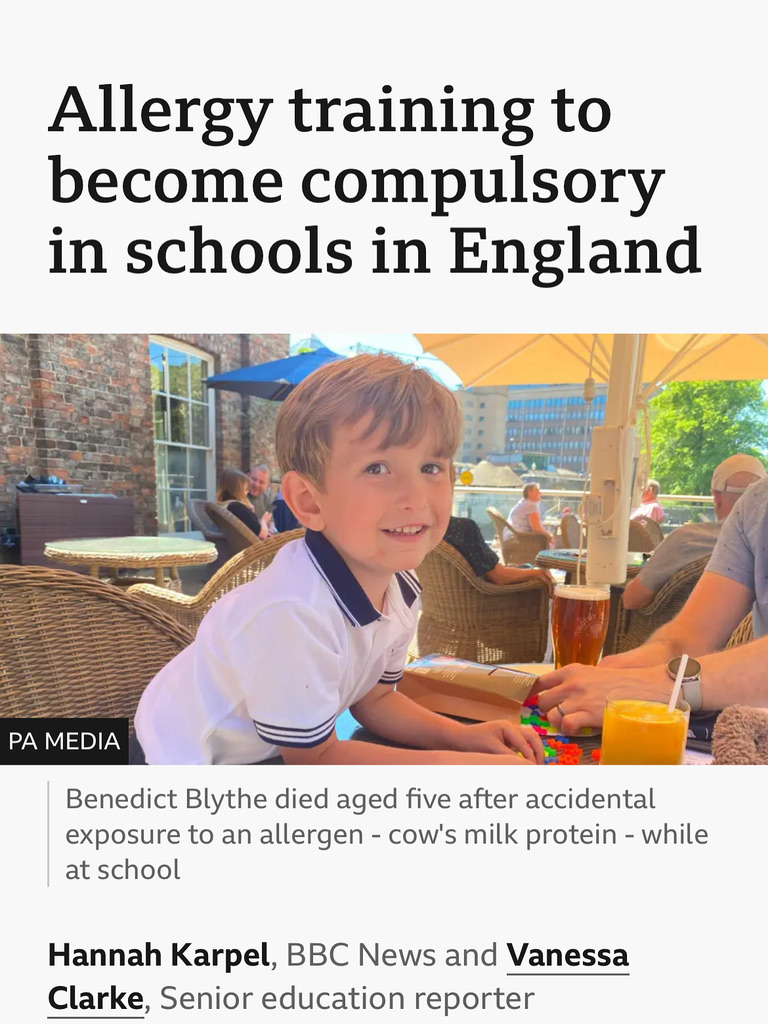
It is named in memory of Benedict Blythe, a five-year-old boy who tragically died after suffering an anaphylactic reaction at school in 2021.
Following his death, Benedict’s family launched a campaign calling for consistent, life-saving protections in schools, including:
- Mandatory allergy training
- Whole-school allergy policies
- Access to spare adrenaline auto-injectors (AAIs)
- Better emergency response procedures
- Individual healthcare plans for pupils with allergies
In 2026, the Government confirmed it would introduce mandatory statutory allergy guidance for schools, with implementation expected from September 2026.
Department for Education announcement
Why This Is Such a Significant Moment
Until now, allergy safety in schools has often depended on individual schools, staff knowledge, or local policies.
Some schools have excellent allergy procedures and well-trained teams. Others have relied on inconsistent guidance, limited training, or unclear emergency protocols.
Campaigners and charities have repeatedly described this as a “postcode lottery” for children with allergies.
Benedict’s Law changes the conversation completely.
For the first time, allergy safety is becoming a national safeguarding expectation rather than optional best practice.
What Schools Will Be Required to Do
Mandatory Allergy Policies
Schools will need clear, published allergy and anaphylaxis procedures that staff and families can access easily.
Staff Allergy Training
Mandatory allergy awareness and anaphylaxis training will help staff:
- Recognise symptoms quickly
- Understand how reactions can vary
- Use adrenaline auto-injectors confidently
- Respond appropriately during emergencies
Research highlighted by allergy organisations found that many teachers previously had little or no allergy training.
Natasha Allergy Research Foundation information
Spare Adrenaline Pens in Schools
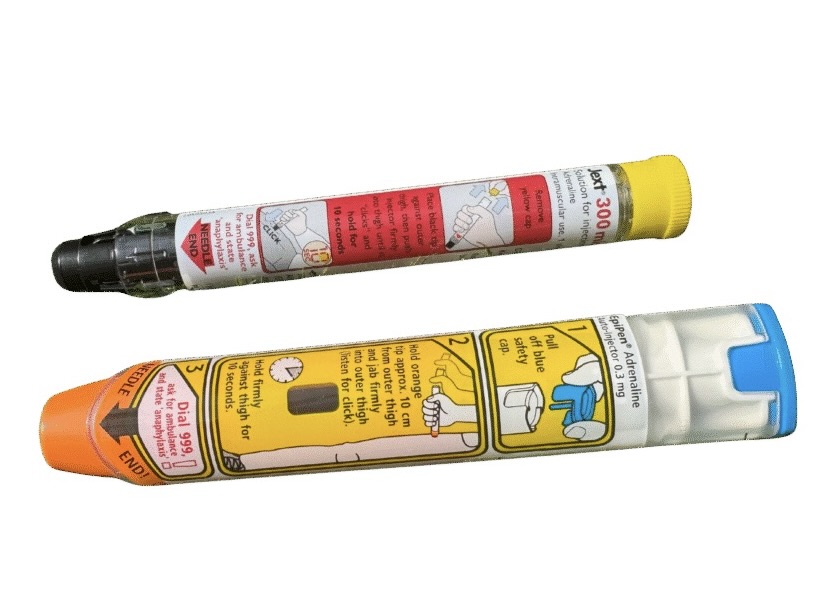
Schools will be expected to stock spare adrenaline auto-injectors for emergencies. The Department for Education described this as a life-saving measure designed to improve emergency response times.
Individual Allergy Action Plans
Children with allergies should have personalised healthcare and allergy management plans to ensure staff understand:
- Their triggers
- Symptoms
- Medication requirements
- Emergency procedures
Whole-School Allergy Awareness
The guidance encourages schools to adopt a proactive culture around allergy safety rather than treating allergies as isolated medical issues.
The Difference This Could Make for Children
Safer Learning Environments
Children with allergies spend a huge portion of their lives at school.
Better procedures around food handling, allergen awareness, and cross-contamination could significantly reduce accidental exposures.
This creates safer classrooms, dining areas, school trips, and extracurricular activities.
Faster Emergency Responses
In cases of anaphylaxis, every minute matters.
The new requirements aim to ensure staff can recognise reactions quickly and administer adrenaline without hesitation.
As highlighted during Parliamentary debate, delays in recognising symptoms or accessing trained staff can have devastating consequences.
Parliamentary discussion:
https://hansard.parliament.uk/Lords/2026-02-03/debates/451032D8-0055-40FD-86AE-0B0AA6B332F1/ChildrensWellbeingAndSchoolsBill
Greater Inclusion

Children with allergies can sometimes feel excluded from:
- Birthday celebrations
- School trips
- Cooking activities
- Dining halls
- Sports events
- Social activities involving food
Benedict’s Law encourages schools to think more inclusively and proactively about how children with allergies participate safely in everyday school life.
Supporting the Benedict Blythe Foundation
The Benedict Blythe Foundation has played a vital role in raising awareness and campaigning for safer schools for children with allergies.
Founded by Benedict’s family following his tragic death in 2021, the Foundation continues to promote allergy education, school safety, and stronger protections for children living with allergies and asthma.
You can learn more or support their work here.
Final Thoughts
Benedict’s Law represents a historic shift in how schools approach allergy safety.
For children living with allergies, it has the potential to mean:
- Safer school environments
- Better-trained staff
- Faster emergency responses
- Greater inclusion
- Less anxiety for families
Most importantly, it recognises something families have been saying for years:
Children with allergies deserve to feel safe at school.
Benedict’s legacy is already driving meaningful change across England — and that change could save lives.